BIBA 2026 Insurance Insights: What the Industry Said, What It Did, and What It Didn't Say Out Loud

A Camelot Network reflection by Emma Davies, Founder, Waystone Consulting
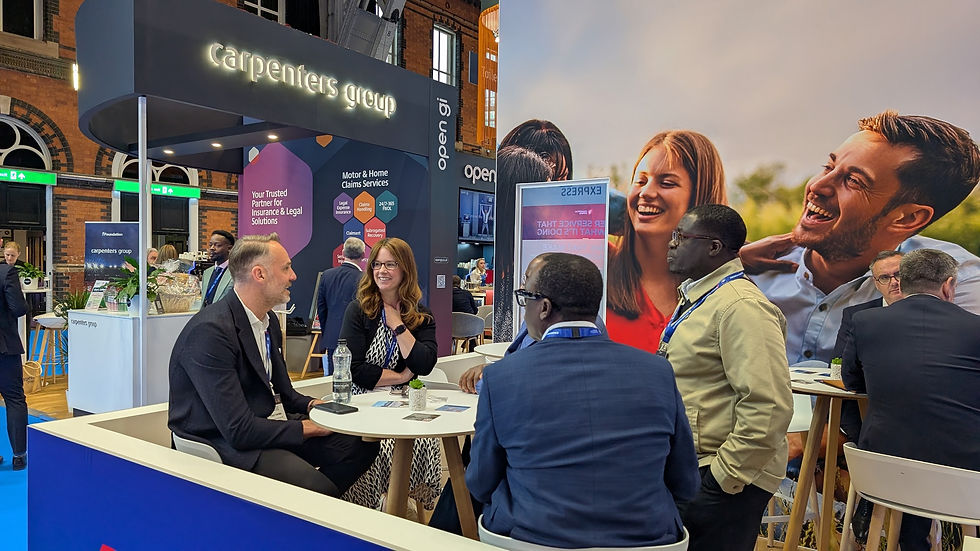
I spent two days at BIBA attending appointments, walking stands, reading the marketing and listening to what people had to say.
But the thing that had me chewing the ears off my partner had nothing to do with AI adoption, new technology, the rise of MGAs or the softening market.
It was so much simpler. It was just how people showed up.
The gap between what people say and what people do.
Having spent most of my career carrier side, here is the observation that has stayed with me longest.
The divide between those who say they put customers first in their marketing and the ones who were actually able to demonstrate it, on the day and in the days that followed, was stark and frankly impossible to ignore. Between those who returned calls before the conference and those who didn't. Between the people who approached a new meeting as a chance to explore a relationship and those who treated it as another transaction.
It sounds basic. It is basic. But it matters, right now, more than almost anything else. This is a trust business. And in a softening market, people get to choose.
And when people can choose, they don't choose those who are slow to reply. They don't choose teams that feel stretched, pressured, or weighed down by the volume of what's on their plate. They don't choose the people who make them feel like a number or another task to tick off.
But I will tell you who they do choose. They choose the people whose energy matches theirs. Who love what they are doing. Who don't just talk about their propositions, they genuinely believe in them. Those who are curious, who lean in. And it's no coincidence that these people almost always belong to organisations where people have been given genuine autonomy. Those who can talk with confidence because they trust the operating structures and leadership behind them to follow through.
For me, it reaffirmed the belief that getting a company's culture right is just as critical as any new technology in how it supports its people to show up for their customers. Because on a stage like BIBA, where you put your best on display, the difference is visible. Especially when the market gives people options.
A softening market is creating space. The question is who's ready for it.
Everyone knows rates are easing. That's not news.
But the carriers who've been cautious about new agency appointments for two years are now opening up. Thresholds are relaxing. Appetite is broadening as carriers look for new areas of growth. And with delegated authority market share forecast to exceed 45% by 2027, the carriers and MGAs who walked away from BIBA with the strongest pipeline understood something important: a softening market isn't a threat to your distribution strategy. In the right hands, it's an accelerant.
But the window doesn't stay open indefinitely. Those who'll benefit most are the ones who've done the quiet work, the boring but necessary bits. Building strong operational foundations. Developing propositions customers want. Working on their culture. Giving their people the tools, the trust and the breathing room to show up in the right ways.
AI moved from conversation to demonstration. And the same divide showed up there too.
In 2025, AI was on the panels. In 2026, it was on the stands, live, working, and in some cases already integrated.
CFC's announcement of Lane Assist was the most concrete example. Their agentic underwriting pilot, described by CFC as a world first in specialty insurance, takes a submission from email through to quote recommendation in seconds.
But the question I kept asking on the floor wasn't "what can this do?" It was "who is accountable when it gets it wrong?"
Because the same pattern kept appearing. The organisations generating the most interesting AI conversations were the ones whose people were already engaged, already curious, already asking good questions. And the ones where AI felt like a bolt-on solution were often the same ones where the culture conversation hadn't happened yet.
AI can help fix your processing time. It can't fix your culture. The gap between organisations that will use AI well and those that won't isn't a technology gap. It's a leadership gap. And no amount of AI investment papers over a culture that doesn't genuinely want to serve.
The organisations that win the AI race won't just be the ones with the most sophisticated tools. They'll be the ones where the technology sits on top of a culture that was already trying to do the right thing.
The industry is starting to change.
But the change I found most significant wasn't on the main stage.
The Women in Insurance Breakfast. The Men's Mental Health Breakfast. ICAN, the Insurance Inclusion Network, and our Young Broker communities. All of them growing. All of them overdue. And this year, genuinely feeling like they were part of the conference rather than a fringe event.
Having spent time this year walking the floor with brokers building propositions for customers the industry has largely overlooked, it was encouraging to hear networks like Acrisure Eleven moving beyond the conversation and into real examples of propositions that reach beyond the traditional broker client base. Underserved communities being treated not as a regulatory obligation but as a genuine commercial opportunity.
This isn't a simple story of progress. Some came ready to lean into these conversations, curious and patient, asking about the community first rather than just the income. Others weren't there yet. And that gap, between where the market says it is and where it actually is, is worth being honest about. Because acknowledging it is the only way to close it.
The thing nobody said out loud
The industry knows what it needs to change. Operating models. Distribution strategies. Who gets served. Who gets a seat.
But BIBA 2026 reminded me that all of it, the technology, the strategy, the proposition design, sits downstream of one thing. Whether your people actually want to show up for the people on the other side of the table.
This isn't a criticism of any organisation specifically. It's an observation about an industry in transition. Most people at BIBA this year were there because they care. Because they want to do better. Because they understand that the market is changing and that standing still isn't an option.
The people who look back on this year as a turning point won't be the ones who had the most meetings. They'll be the ones who had the most honest conversations. Who showed up. Who leant in. Who treated the person across the table like a person.
Time:To was the theme. But an enthusiastic conversation on the day will only take you so far. The more important question now is who will act.
Emma Davies is the founder of Waystone Consulting, working with financial services leadership teams on operating model design, commercial growth strategy and change programmes. If any of this resonates and you want a thinking partner who will say the thing others won't, connect with Emma on LinkedIn or reach out directly at emma.davies@waystoneconsulting.co.uk
Enjoyed this article? Join us at the next Camelot SPARK event on 2nd June where CFC will be presenting Lane Assist, their agentic AI underwriting pilot, described as a world first in specialty insurance.